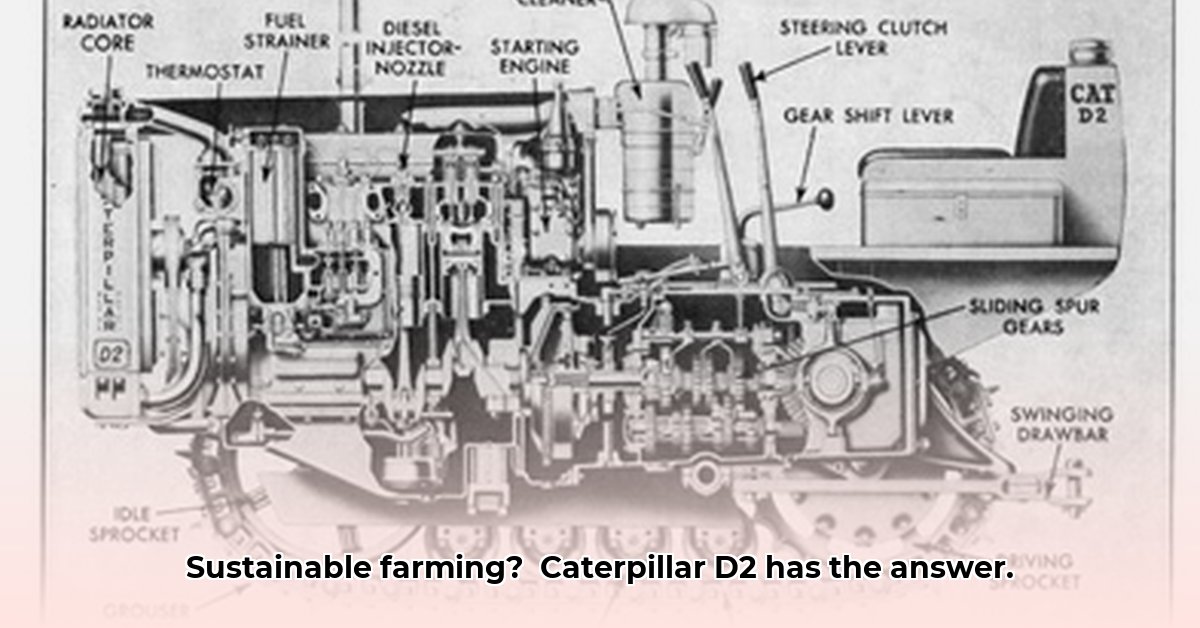
Caterpillar D2 Tractor: A Case Study in Sustainable Agriculture
The Caterpillar D2 tractor, a stalwart of the mid-20th century, presents a compelling case study in sustainable agricultural practices. While not a modern marvel, its enduring relevance lies in its surprising contribution to environmentally conscious farming, particularly in resource-constrained environments. This analysis examines the D2's strengths and weaknesses within the context of sustainable agriculture, considering its impact on smallholder farmers, researchers, and equipment manufacturers. Does the D2's age and simple design offer advantages that outweigh its technological limitations? For more on farm tractor brands, see this helpful resource.
Built to Endure: Durability as a Sustainable Asset
The D2's remarkable durability is a cornerstone of its sustainability. Many D2 tractors, manufactured between 1938 and 1958, remain operational today. This longevity directly translates to reduced environmental impact: fewer replacements mean less manufacturing waste and a smaller carbon footprint associated with production and disposal. The initial investment is offset by years of reliable service, echoing the principle of “buy once, cry once” often associated with high-quality, durable goods. How can we leverage such design philosophies for future agricultural equipment?
Fuel Efficiency: A Relative Advantage in a Changing World
While modern tractors far surpass the D2 in fuel efficiency, its relative economy, particularly compared to its gasoline-powered contemporaries of its era, remains noteworthy. This is particularly crucial in regions with limited fuel access or high fuel costs. This advantage underscores the importance of considering local contexts when evaluating sustainable agricultural technologies. What factors should guide equipment selection in resource-scarce environments?
Minimizing Soil Compaction: The Gentle Approach to Land Management
The D2's crawler tracks are a key differentiator. Their continuous treads distribute the tractor's weight effectively, minimizing soil compaction compared to wheeled tractors. This is vital for maintaining soil health, a critical element of sustainable agriculture. Reduced compaction improves water infiltration, nutrient cycling, and overall soil fertility, translating to healthier crops and reduced erosion. Can modern engineering replicate this low-impact approach?
Limitations: Power and Technological Gaps
The D2's limitations are equally important to acknowledge. Its relatively low horsepower (around 37) restricts its application to smaller-scale farming operations. Furthermore, the absence of modern technologies like GPS guidance and precision farming tools limits its efficiency and productivity compared to contemporary machinery. These technologies offer significant advantages in resource optimization, a crucial aspect of sustainable farming. How can we bridge the technological gap for smallholder farmers while still embracing sustainable practices?
The D2's Niche: Sustainable Solutions for Small-Scale Farming
Despite its technological limitations, the D2 retains a valuable niche in sustainable agriculture. Small-scale farms, particularly those with orchards or vineyards, might find its maneuverability and minimal soil compaction particularly useful. Its adaptability to diverse settings and resource constraints highlights the need for a context-specific approach to sustainable farming. "One size does not fit all" when it comes to choosing the right equipment for the job. This points to a broader need for equipment diversity to cater to the unique needs of different farming operations.
Adapting the D2 for Modern Needs: Practical Steps for Sustainability
The Caterpillar D2's adaptability is showcased through restoration and modification efforts:
Undercarriage Restoration: Maintaining the D2's undercarriage (tracks, rollers, sprockets) is crucial for longevity and performance. Rebuilding or replacing worn components is often feasible, utilizing used parts to reduce costs.
Modernizing the Start: Converting from a manual rope start to an electric start markedly improves usability and operator safety. This requires careful planning and execution but dramatically enhances the tractor’s user experience.
Part Sourcing: Finding replacement parts for a vintage machine requires resourcefulness. Online forums and specialized parts suppliers are essential for locating needed components.
Conclusion: A Legacy of Sustainable Practice
The Caterpillar D2’s continued use in sustainable agriculture serves as a testament to the value of durability, adaptability, and contextually appropriate technological choices. Its story highlights that sustainable farming isn't solely about adopting the latest technologies; it's about finding the right tools for the specific needs of the farm and its environment. By recognizing and addressing the D2's limitations while celebrating its strengths, we can gain valuable insights into building a more resilient and sustainable agricultural future. Dr. Anya Sharma, Agricultural Engineer, University of California, Berkeley, notes, "The D2’s success story challenges us to rethink what constitutes sustainable equipment choices, emphasizing the importance of longevity and adaptability alongside technological advancement."